Phantograms
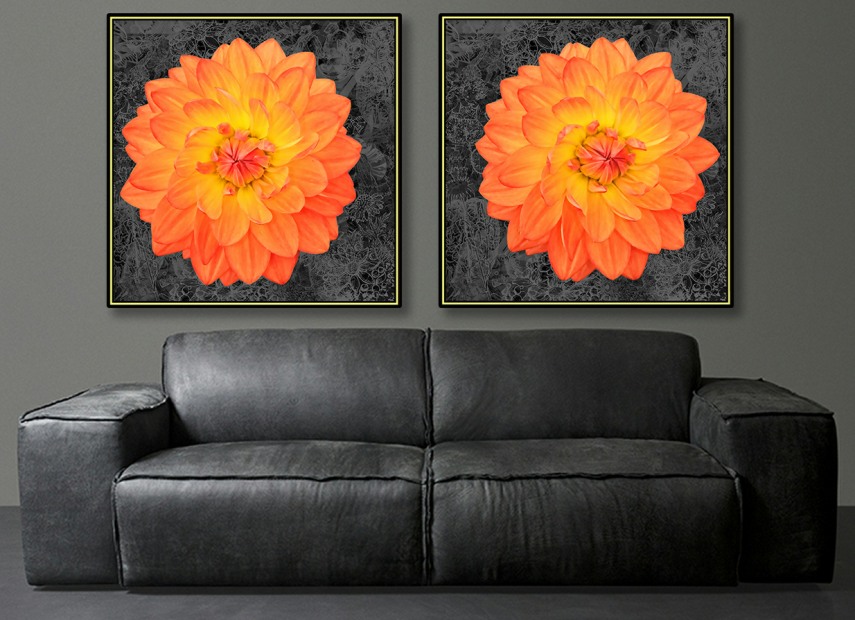

Phantograms are a type of stereoscopic image where the subject appears to float above the background, coming into the viewer’s space like a phantom. Phantograms require viewers to cross their eyes, so the left eye is directed to the image on the right and the right eye to the image on the left. Looking at the two images in this way makes a new image appear between them, so one sees three images. The new image is in 3-D; gradually the two images at the sides may fade and disappear as one looks more carefully at the 3-D image in the middle.
Phantograms create the magic of three-dimensionality from a pair of flat images, without requiring a holography studio to make them, nor any special lighting to reconstruct the 3-D image.
These phantograms are made using the methods disclosed in United States Patent 6614427, via stereoscopic photography (or computer-generated 3-D models) in conjunction with graphic elements.
Whilst holograms require specialist equipment and expertise to make physical copies, phantograms can be printed onto canvas by your local large-format printer.
The first of a series of Phantograms is now available for you to print (up to 30 inches square). Download the full-size artwork.